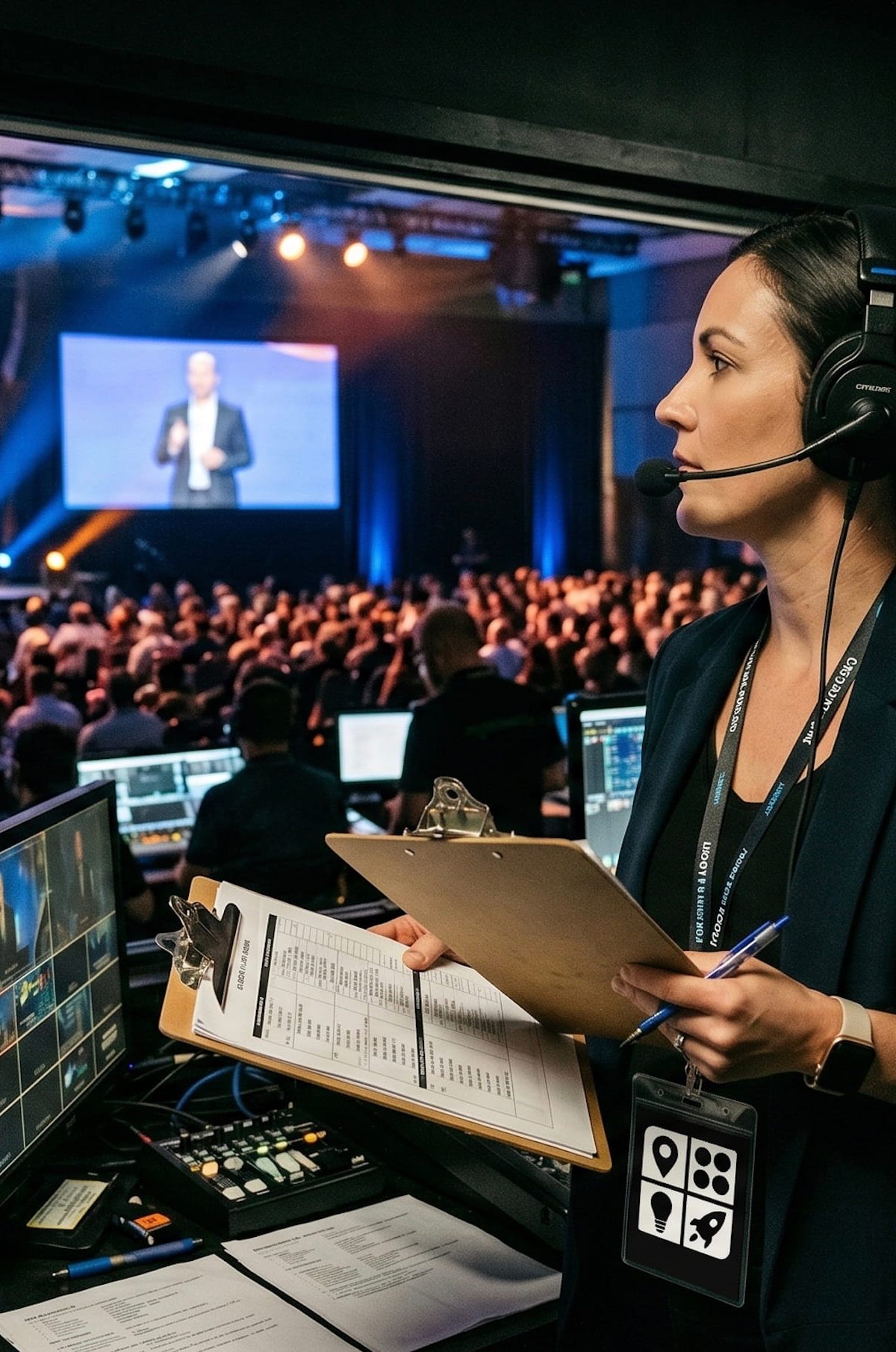
A speaker's experience of your event is decided in five touchpoints, most of which happen off-stage. Get them right and the speaker will deliver a great result. Get them wrong and the talk is fine but not their best.
We only want you to experience the best and will help you achieve it.
1. The brief-back call (T-minus 2 to 4 weeks)
Twenty minutes on a video call. The speaker reacts to your briefing, and walks you through what they're planning to say.
You're listening for:
- Does this match the brief you sent?
- Are the examples relevant to the audience in the room?
- Is there a stat or claim that needs sense-checking against your industry?
If something's off, say so, it's absolutely fine. The speaker wants to deliver a great result for you and your feedback helps that happen.
2. Tech check (T-minus 1 day, or 90 minutes before)
Slide format, click-through, confidence monitor, lectern vs roaming mic, lighting, screen ratio (so much of the speaker's deck has been built for 16:9 — confirm your screen actually is 16:9). If they're using a video, play the video. If they're using a clicker, hand them the clicker.
Nine times out of ten the issue isn't the speaker, it's that the AV team has set up for someone else and nobody told them the previous session had different needs.
3. The green room
It is not a lounge. It is a quiet, lit room with:
- Still water (room temperature, not iced — cold water tightens vocal cords)
- One snack option that isn't biscuits
- A mirror
- Phone signal or wifi
- A door that closes
It's best practice to not put the speaker in there with sponsors, journalists or the CEO unless they've explicitly agreed. The 30 minutes before a keynote is when the speaker is rehearsing in their head; uninvited company breaks the spell.
4. The introduction
Three sentences is often best and the speaker will just tell you how they like to be introduced.
1. Who they are, in plain language
2. Why they're here today
3. The handover line
They know how they want to land on stage better than you do.
5. The walk-off
When the talk ends, give them somewhere to go. A producer at the side of stage with water, a quiet route back to the green room, and a 10-minute buffer before any meet-and-greet.
If Q&A is happening, the moderator (not the speaker) holds the mic, picks questions and shuts down the over-long ones. It's best to never make the speaker do crowd-management of their own Q&A.
After the event
A short, specific thank-you message ("the bit about XXX was the most-quoted line of the day") is always well received. No need to send a hamper.
Enjoy the experience, it's fun!
Need a speaker for an event you're planning?
We'll come back with a hand-picked shortlist within hours.
Browse speakers